The kitchen is, statistically, the most accident-prone room in the home. Burns from contact or splashing, cuts, deep-fat fires, carbon monoxide poisoning: the majority of these accidents are avoidable, and most come down to poor ergonomics as much as to a lapse in attention. Designing a safe kitchen means designing a kitchen where dangerous actions become unlikely.
Contact burns: the hot zone must be easy to read
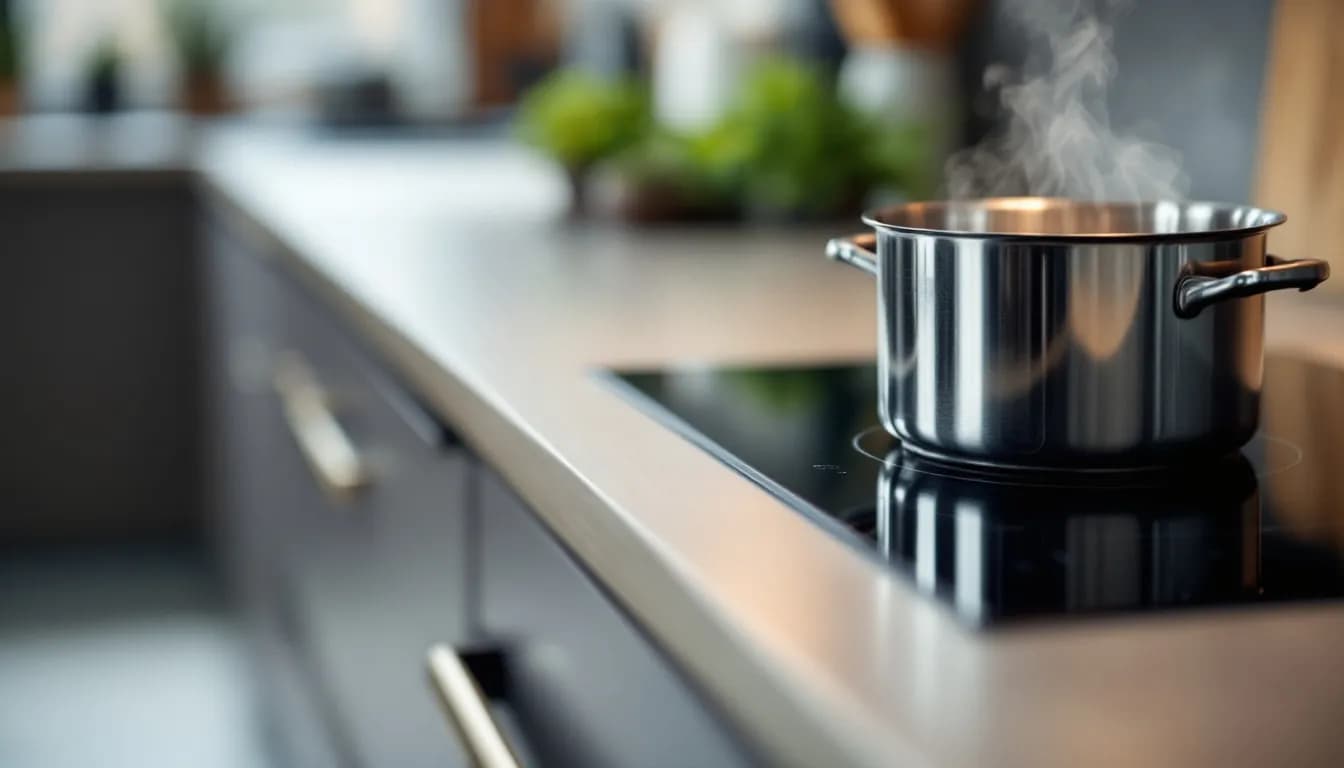
An induction hob stays cool to the touch on its surface, but the pan transfers the heat indirectly. The first rule: pan handles turned towards the inside of the worktop, never jutting out over the floor, especially when children are around. A handle that sticks out is a tipped-over pan waiting to happen.
Pyrolytic ovens reach 500°C during their cleaning cycle. The door, even when triple-glazed, often exceeds 60°C on the front. An oven set in a tall unit, at shoulder height, removes the risk of accidental contact with a passing child. A built-under oven, by contrast, is more exposed.
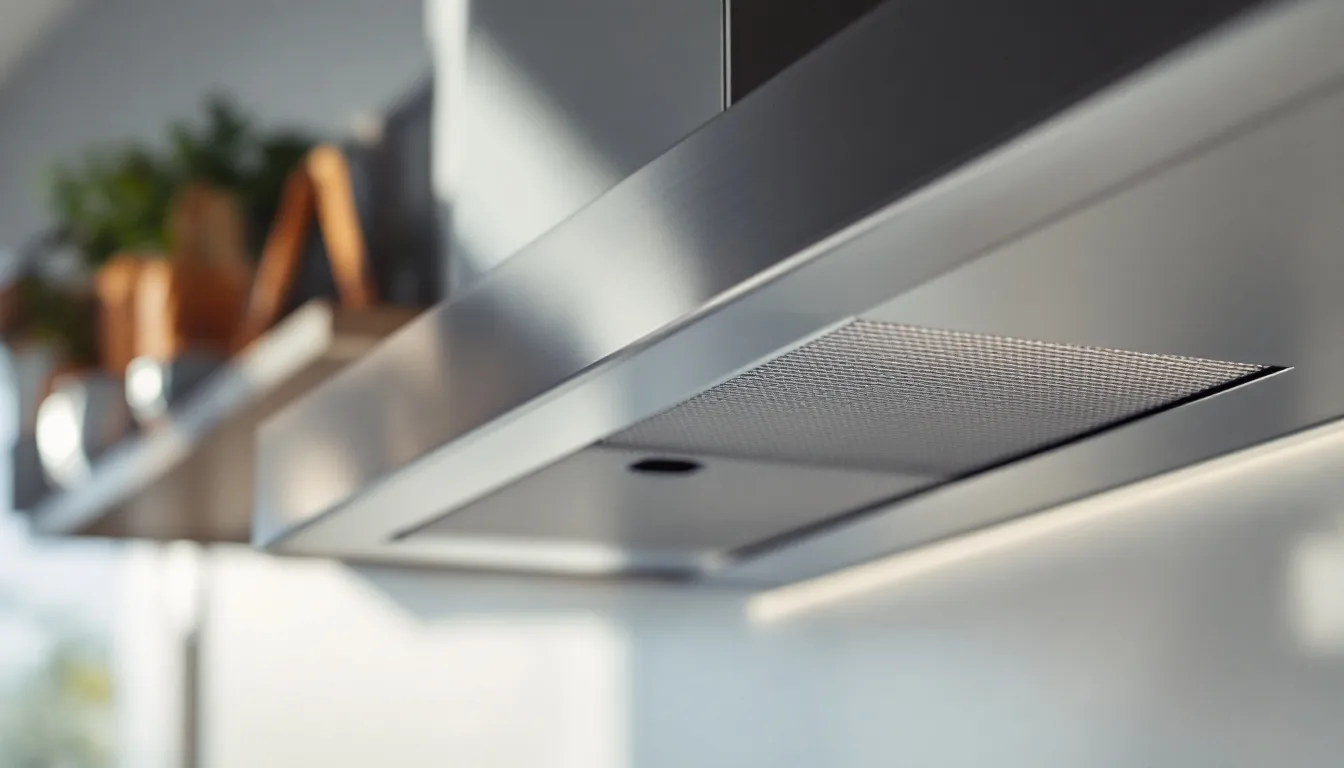
Extractor hoods above a gas range must respect a minimum clearance of 65 to 75 cm. Below that, the metal filter heats beyond 80°C and becomes a dangerous point of contact when cleaning.
The right habits
- Pan handles turned towards the inside of the worktop, never jutting out
- No cloths or tea towels in the immediate vicinity of the burners or the hot oven
- Hood switched on from the very first burner, never as an afterthought once splashing has started
- Pan matched to the burner, never smaller than the heated zone
- Children kept away from the cooking zone by a clear buffer area
Splash burns: oil, water, steam
Hot oil is the number-one cause of hospital admission in domestic paediatrics. A badly positioned deep-fat fryer, a container of oil placed near a walkway, and the splash catches the face. The rule: deep-frying always at the back of the worktop, never near the edge, and ideally on the rearmost cooking zone.
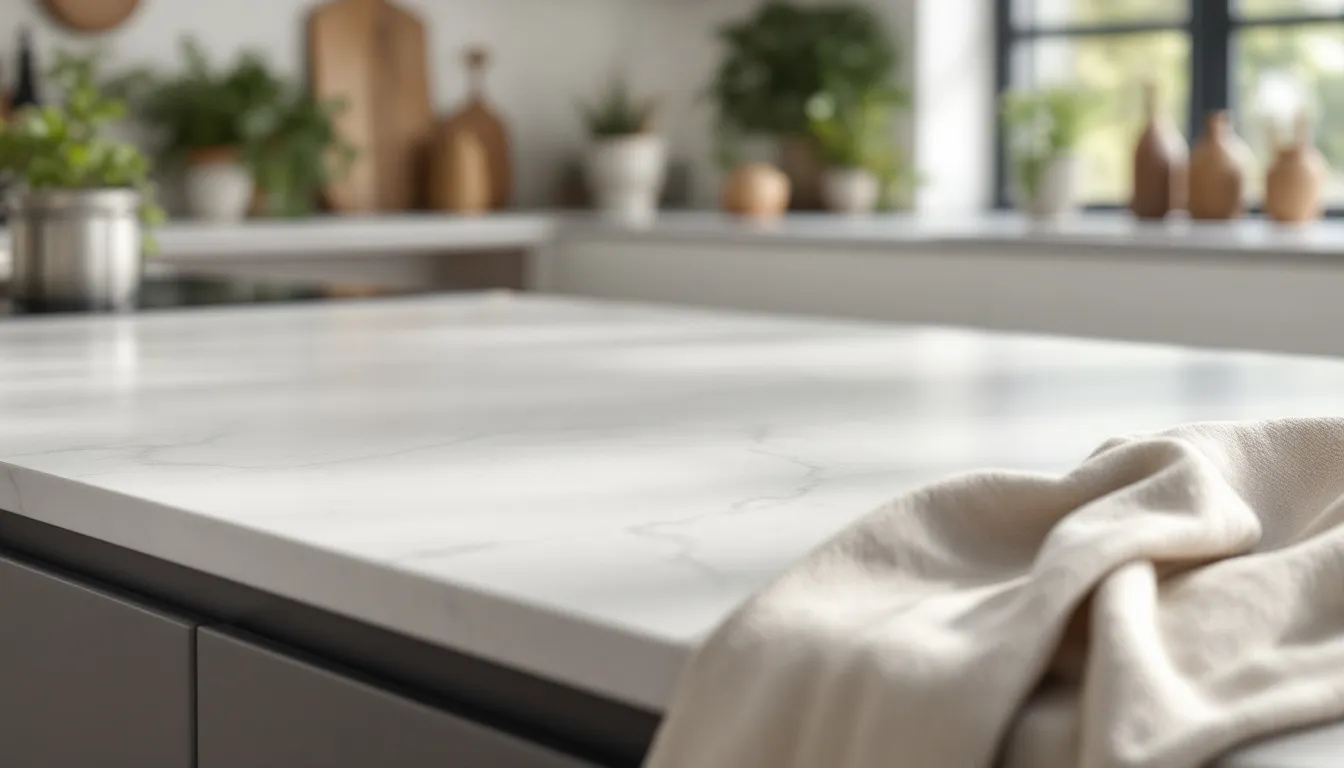
Water thrown into boiling oil causes an immediate explosive splash. A cloth kept right next to the range lets you mop up without having to run for it. A fire blanket stored at shoulder height, reachable without crossing the cooking zone, remains the most effective reflex should a fire break out.
Cuts and slips: the ergonomics of the gesture
A good kitchen clearly separates wet zones from cutting zones. A wet worktop, a knife that slips, and the hand pays for it. The chopping board should always sit on a slightly damp cloth that holds it in place. Knives should be kept away from catch-all drawers, in a magnetic block or a compartmented drawer, blades protected.
The floor deserves the same attention. Very smooth tiles near the sink or the dishwasher gather water and become slippery. A non-slip mat or a textured covering in these areas clearly reduces the risk of a fall, particularly for older people.
Fires and poisoning: ventilation and detection
A smoke detector fitted in the kitchen is rarely suitable: it goes off at the slightest slightly overdone piece of toast. It should be placed in the adjoining corridor, 3 to 4 metres from the cooking zone. For the kitchen itself, a heat detector (triggering at 65 to 70°C) is the professional solution.
On gas ranges, a carbon monoxide detector is essential, especially in well-insulated homes where the air does not renew itself spontaneously. Mechanical ventilation sized correctly (250 to 600 m³/h depending on the cooking surface) extracts heat, vapours and combustion gases, a subject we cover in detail in our article on ventilation and airflow in the kitchen. An undersized hood gives a false sense of security.
Safety in the kitchen depends less on constant vigilance than on the layout: a clear worktop on either side of the burners, controls out of the heat zone, a setting-down area between the cooking and the water, and detection suited to each risk. When the space is well thought out, the dangerous gesture simply becomes unlikely.
Going further on safety
Preventing accidents and designing a comfortable kitchen ultimately come down to the same logic: thinking about circulation and distances before thinking about appliances. To frame this approach from the plan stage onwards, see our guide to an ergonomic and safe kitchen.