The order of a drawer shows in the movement it saves. When a knife, a ladle or a spice tin is found without looking, the kitchen breathes. When you have to rummage, move things, put them back, the rhythm breaks. The interior organisation of a drawer is therefore not a decorative detail: it is the extension of the worktop into the volume.
Sort before fitting out
Before buying a single divider, lay all the items out on the worktop and sort. Three piles are enough. The first gathers what you use every day, from the paring knife to the chopping board. The second gathers what you use every week, such as the blender or the scales. The third gathers what comes out fewer than four times a year and has no business being in an active drawer. This last category goes to a tall unit, the cellar or a separate piece of furniture. It is only after this sorting that the interior volumes take on their true measure: you never organise a quantity, you organise a frequency.
The logic of use zones
A well-thought-out drawer corresponds to a precise movement. Near the cooking zone, store the long utensils, the ladles, the wooden spoons, the whisks, using a transverse divider that keeps them parallel. Near the sink, set up knives, boards and tea towels. Beside the preparation zone, keep the bowls, the salad bowls, the scales, the rolling pins. This simple distribution avoids hands crossing in the same volume and limits knocks between items, in keeping with a well-thought-out smooth flow. The drawer then becomes a spatial memory of the cooking flow rather than a disciplined catch-all.
Organisation by zone
- Cooking zone: long utensils, ladles, wooden spoons, whisks on a transverse divider
- Sink zone: knives on an inclined knife holder, chopping boards, tea towels
- Preparation zone: bowls, salad bowls, scales, rolling pins, ramekins
- Dining zone: cutlery, placemats, coasters, napkins, in a soft-closing low drawer
- A deep drawer dedicated to pans and stockpots beneath the hob
Choosing the right divider
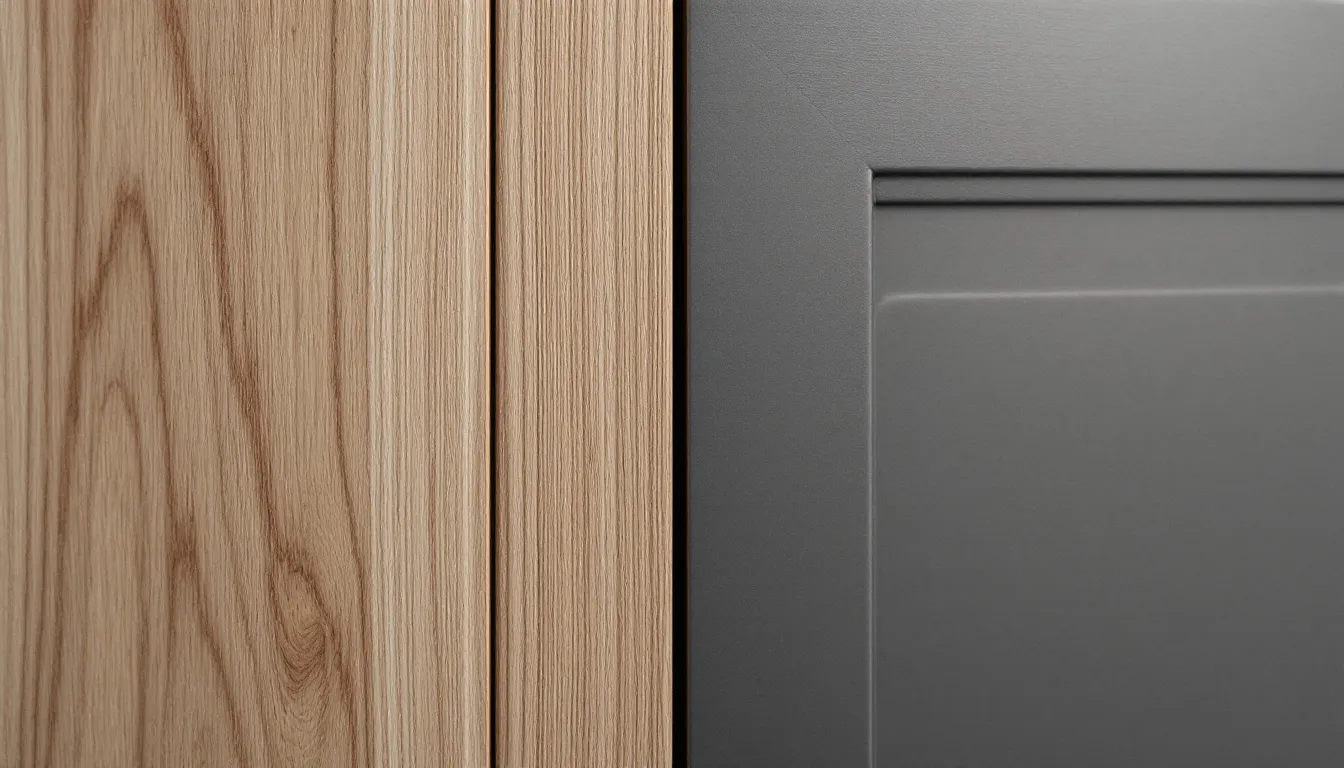
Three families of dividers coexist in today's kitchens. Solid wood inserts, in oak or ash, suit cutlery and small utensils: they cushion knocks, take on a fine patina, clean dry. Lacquered metal inserts, more rigid, organise knives and heavier tools. Modules in technical plastic, often with variable compartments, remain the most economical but age less well. For jars, bottles and flasks, an inclined rack or a spice holder with adjustable compartments stops everything from lining up along the drawer and tipping over when you open it. The underlying rule stays the same: one item, one place, one orientation.
Drawer depth and height
Not all drawers are equal. A low drawer of 100 millimetres suits cutlery, knives and small accessories. A medium drawer, between 140 and 180 millimetres, takes utensils, everyday jars and flat crockery. A deep drawer, from 220 millimetres upwards, takes pans, stockpots and oven dishes, and often finds its place in the corner volumes, where other solutions for making the most of corners take over. For these deep drawers, a second internal level, often called an internal drawer, frees up height without wasting the volume: the lids rest above, the pans below. It is, at modest cost, the most effective solution for densifying low storage.
In the end, organising a drawer always comes back to the same discipline: one item, one place, one orientation, set by frequency of use rather than by quantity. It is this simple rule, repeated drawer after drawer, that means a kitchen tidies itself and stays that way over time.
Well-designed storage
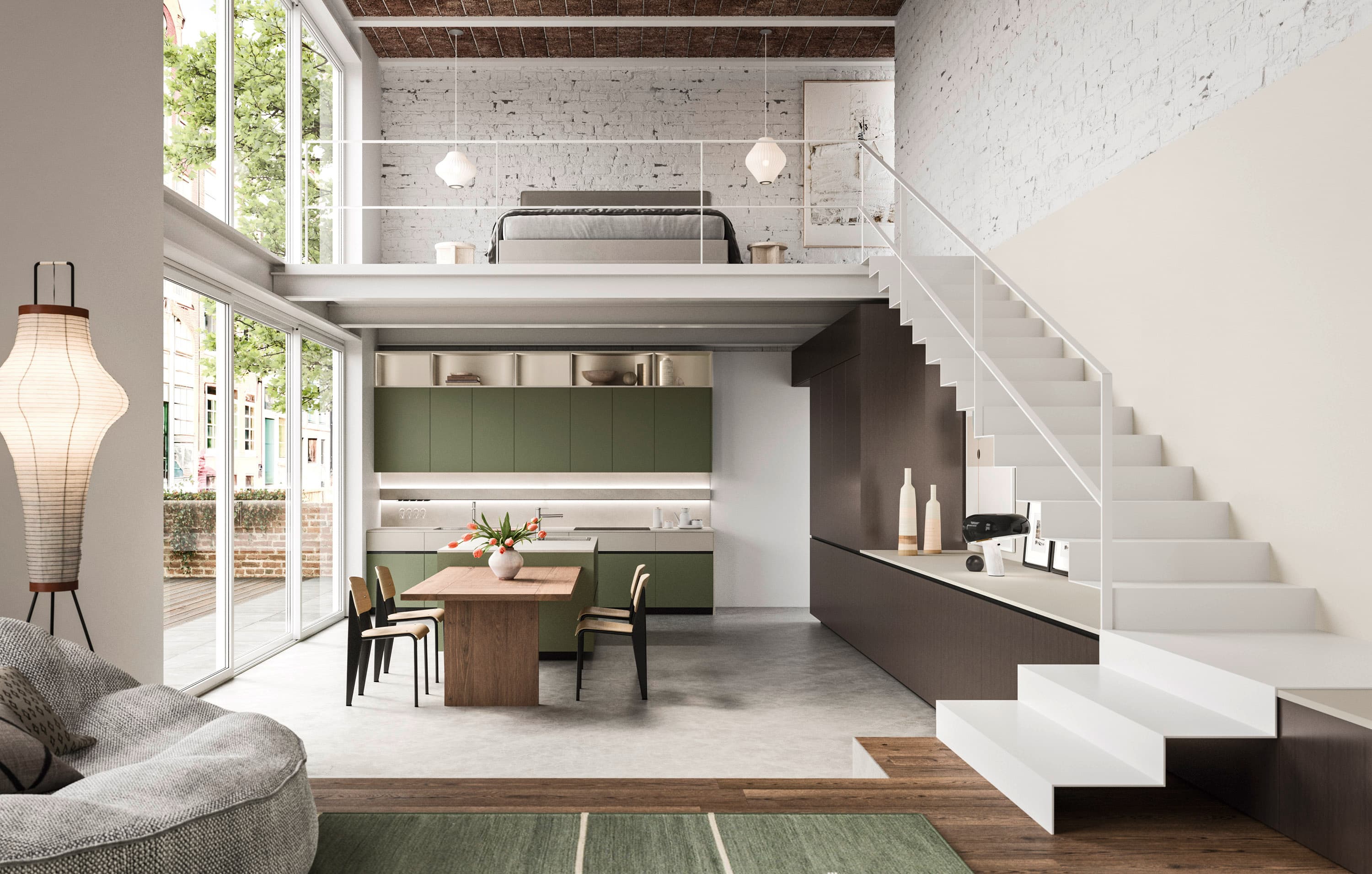
The best organisation is still the one the furniture carries from the start, with interior modules thought through in advance rather than added afterwards. This is the spirit of the Folio model from the Sistema collection, whose interior fit-out, to be seen in the showroom, turns every drawer into bespoke storage. Order, then, is no longer a daily effort but a quality written into the design.