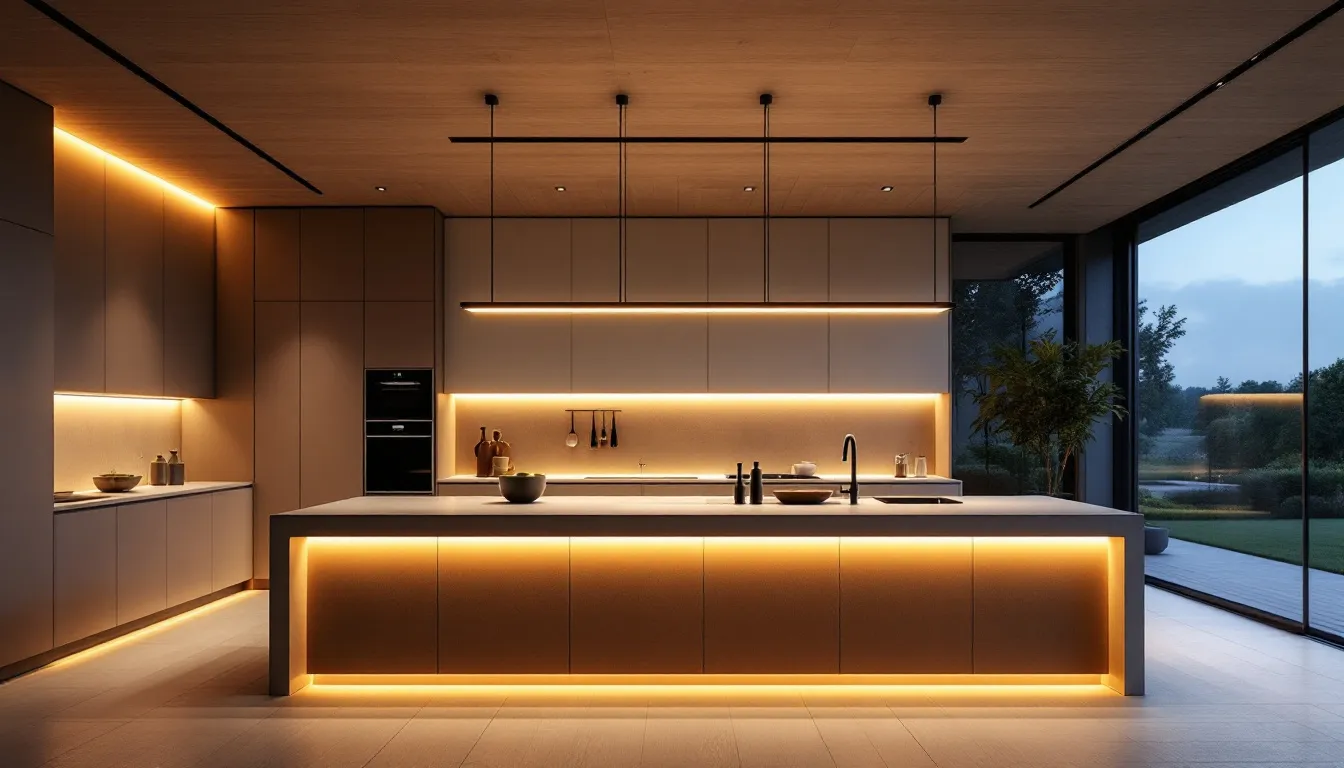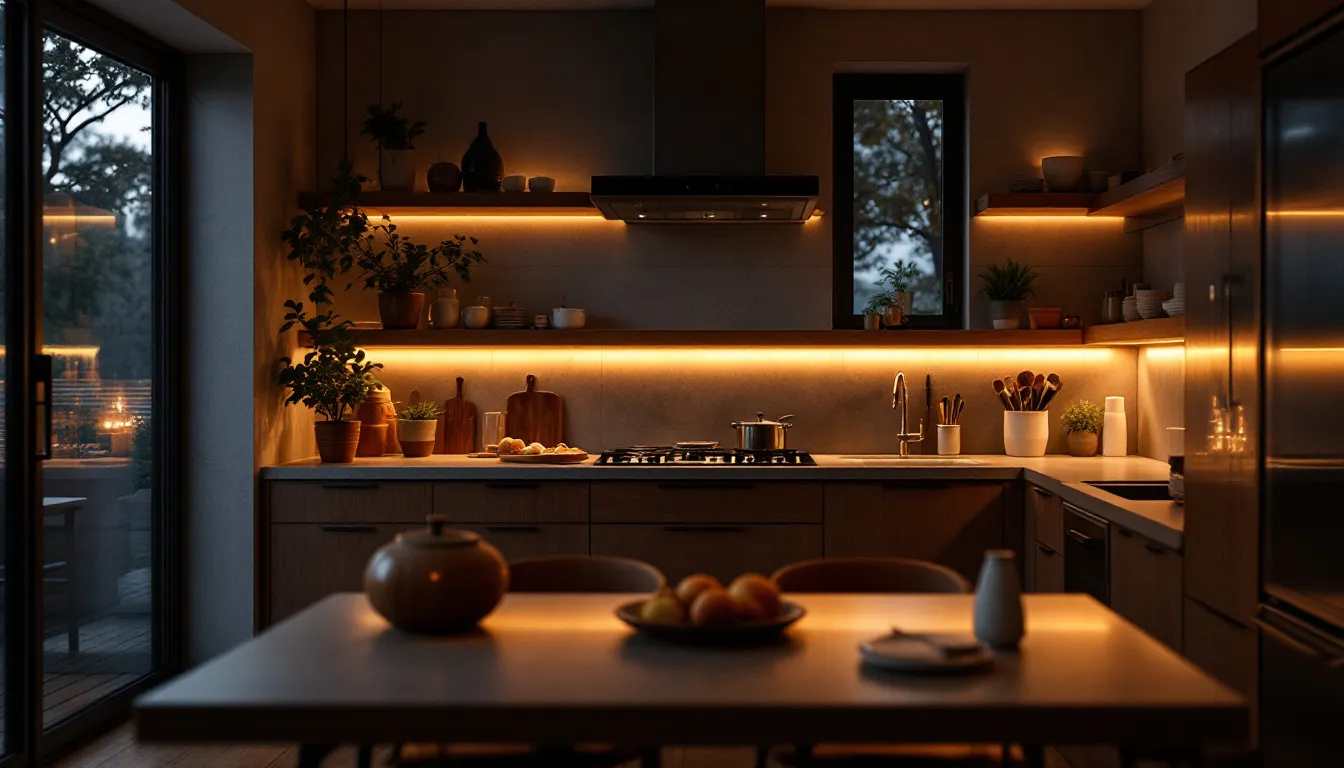
An accessible kitchen is not recognised by visible equipment. It is recognised by the fact that movements become simple, for every body. Designing a space adapted to a person with reduced mobility is not a technical exception: it is a discipline that also improves comfort for other users, and one that fits seamlessly into a demanding design project.
75-90 cm
Adaptable worktop
40-130 cm
Storage within reach
12-15 cm
Lever projection
76 cm
Minimum passage
Thinking about worktop height
The height of the worktop decides much of how comfortable a kitchen is to use. A common standard sets the worktop at 90 centimetres for standing use. For a wheelchair, go down to 80 centimetres, sometimes 75 depending on the seat and knee clearance. When the kitchen is shared between several users, the best answer remains the height-adjustable worktop, set by electric actuators between 70 and 110 centimetres. The mechanism stays hidden beneath the worktop, the control sits in a button integrated into the edge, and adjusting it takes less than a minute. This type of equipment, once reserved for hospital kitchens, is now finding its way into high-end residential projects.
Freeing up space beneath the sink and worktop
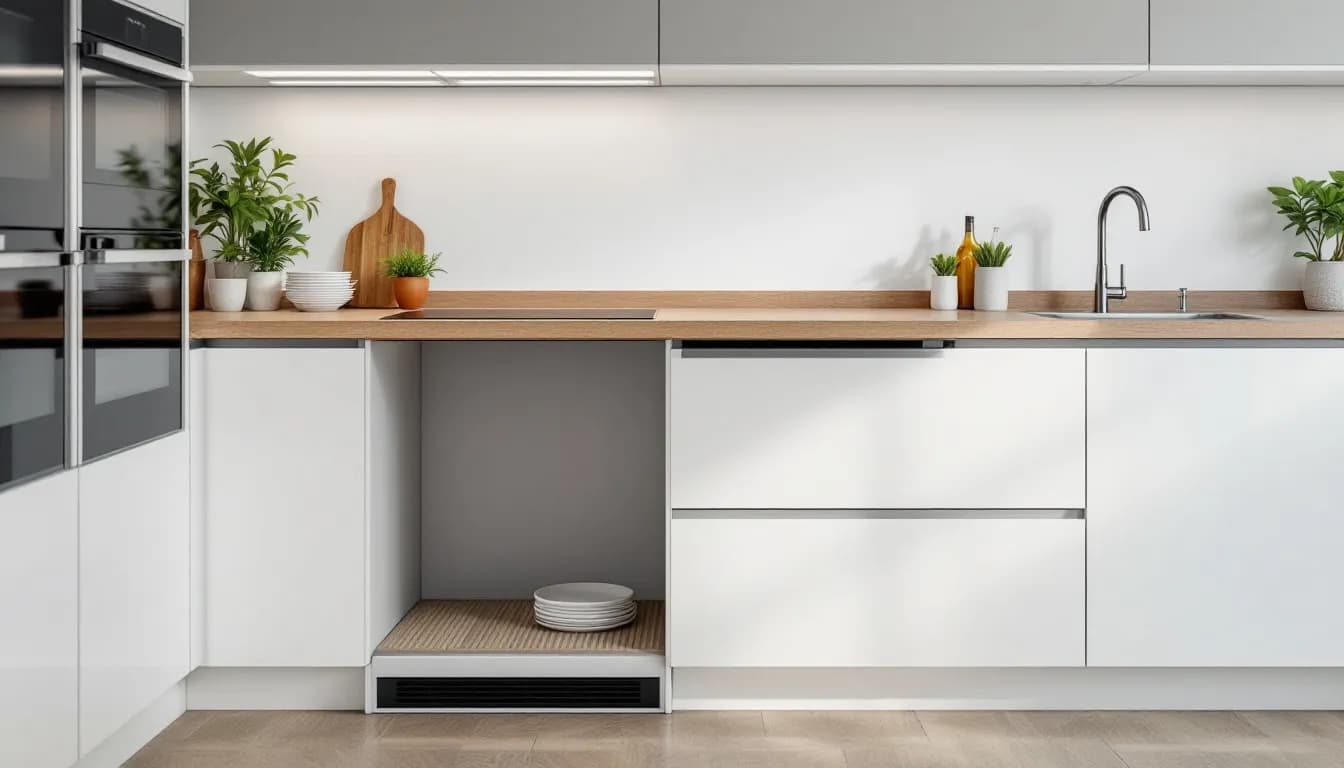
Approaching in a wheelchair assumes the legs can pass beneath the sink and the hob. This means giving up the traditional base cabinet at that point, and providing a hatch or a retractable cabinet that pulls back beneath the worktop as the user comes closer. Insulating protection must cover the hot pipework and the waste, to prevent any contact with the knees. The same logic applies to the cooking zone, where using an induction hob makes safety simpler: no flame, no dangerous surface beyond the pan itself. The oven, ideally, sits at mid-height, with a side-opening or retractable door rather than a drop-down door.
Taps and controls
A tap with a long lever, or better still infrared control, removes the need to grip and turn a knob. For users with limited grip, the lever should project 12 to 15 centimetres so it can be operated with the elbow or the wrist. As for appliances, favour touch controls, dials on the front rather than on the top, and displays readable from a seated height. Drawer and door handles must allow a full grip, which rules out individual knobs in favour of horizontal bars or integrated recessed grips. An accessible kitchen is also recognised by its drawers: all full-opening, all soft-closing, all at the same gripping height. The way you organise their interior then matters as much as their mechanics, since an item found without looking saves a movement every single time.
Storage within reach and landing zones
Useful storage in an accessible kitchen sits between 40 and 130 centimetres from the floor. Beyond that, access requires a motorised system or a stool, which cancels out the adaptation. Mid-height units with descending shelves, known as pull-downs, bring items from up high to a seated level. Deep drawers replace low cupboards. A clear landing zone, immediately beside the oven and the sink, allows you to set down a hot dish or a pan mid-transfer: it is this that turns a technically accessible worktop into one that is genuinely usable. These principles extend those of an ergonomic and safe kitchen, designed for every user.
Essential criteria
- Height-adjustable worktop between 75 and 90 centimetres
- Clear space beneath the sink and the cooking zone for a frontal wheelchair approach
- Oven at mid-height, side-opening or retractable door rather than drop-down
- Full-extension soft-closing drawers, bar handles or integrated recessed grips
- Tap with a long lever of 12 to 15 centimetres or infrared control
A well-thought-out accessible kitchen is not designed from an abstract standard, but from the real movements of a specific user. It is this shift of focus, from the rule towards the person, that turns a technical constraint into lasting comfort, and that ultimately benefits everyone who shares the room.
A final word
Accessibility means giving up nothing on the design side: adjustable systems and modular units blend into the most contemporary lines. This is precisely what the configurations in the Sistema collection are after, with a modularity that lets you adjust heights and depths without betraying the aesthetic. A kitchen designed for every body remains, above all, a beautiful kitchen.