The Mediterranean kitchen is not a postcard backdrop. It is a way of letting a room breathe with a few strong materials, a warm light, and smooth circulation between the cooking zone and the table. The Italians have been designing these kitchens for decades, and their material vocabulary remains one of the most relevant for adapting this style to a Belgian climate.
A palette of oxidised materials
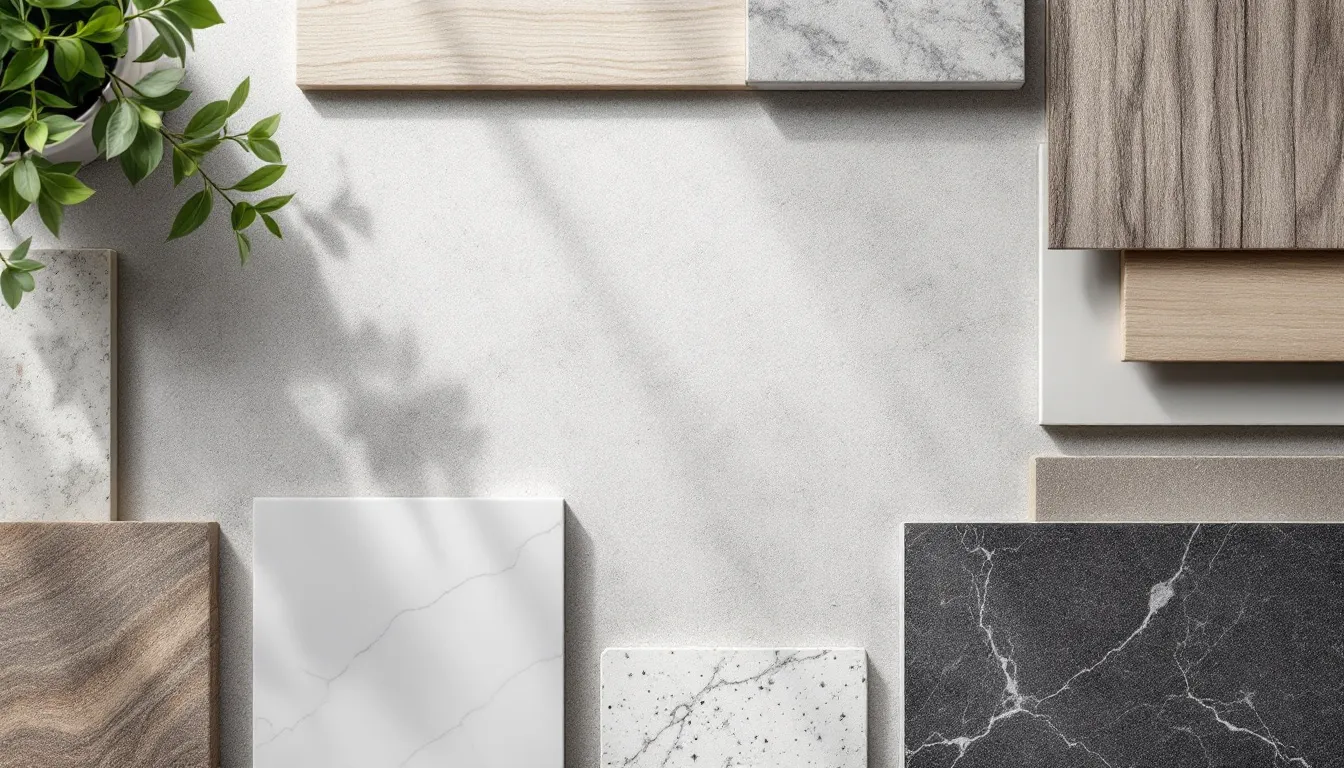
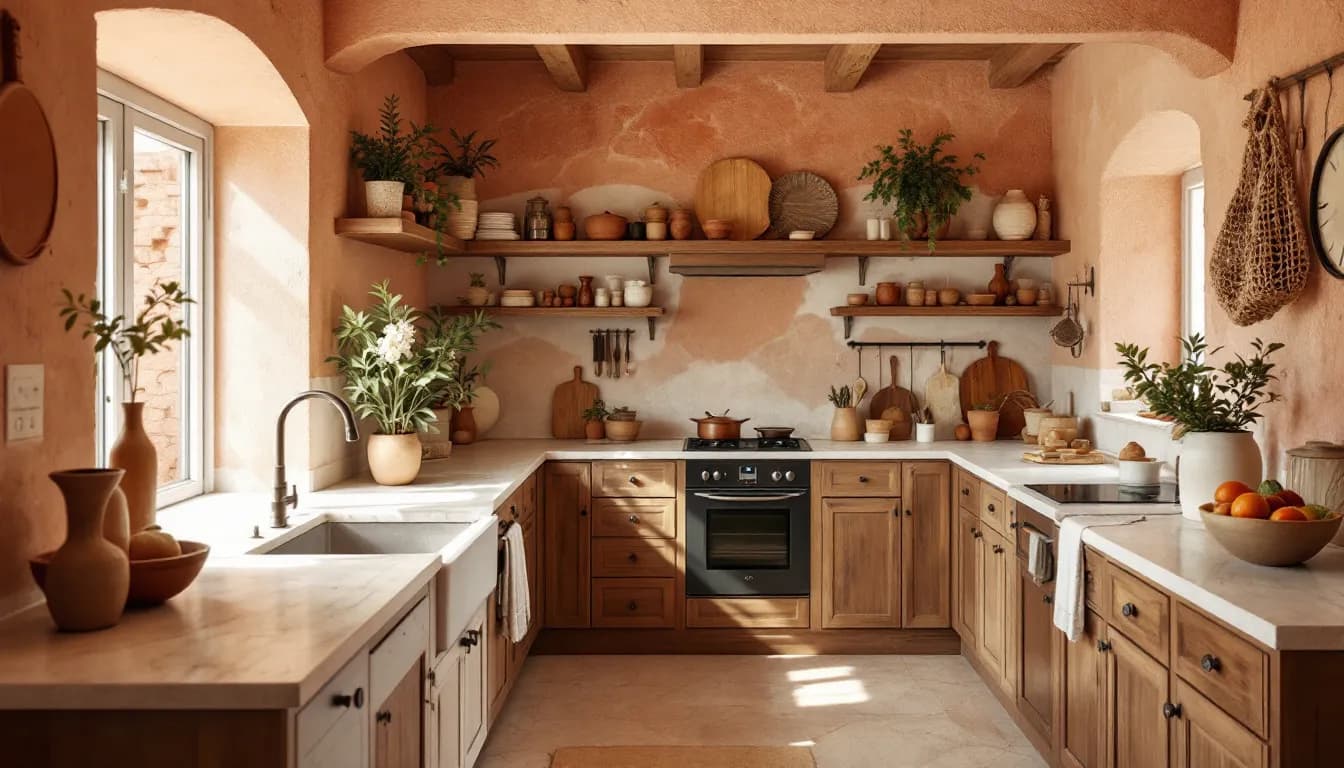
The Mediterranean kitchen rests on four or five materials, no more. Terracotta on the floor or as a partial splashback, pale patinated or driftwood wood for the fronts, limestone or travertine for the worktop, unbleached linen for the curtains and the cushions on the seating. Metal appears in restrained touches, brushed brass or satin stainless steel, without ever dominating.
This restraint is what gives the whole its coherence. A successful Mediterranean kitchen is not cluttered with multiple finishes. It plays on the repetition of a single warm tone across several supports, simply varying the textures.
The Mediterranean register
- Terracotta on the floor or as a partial splashback
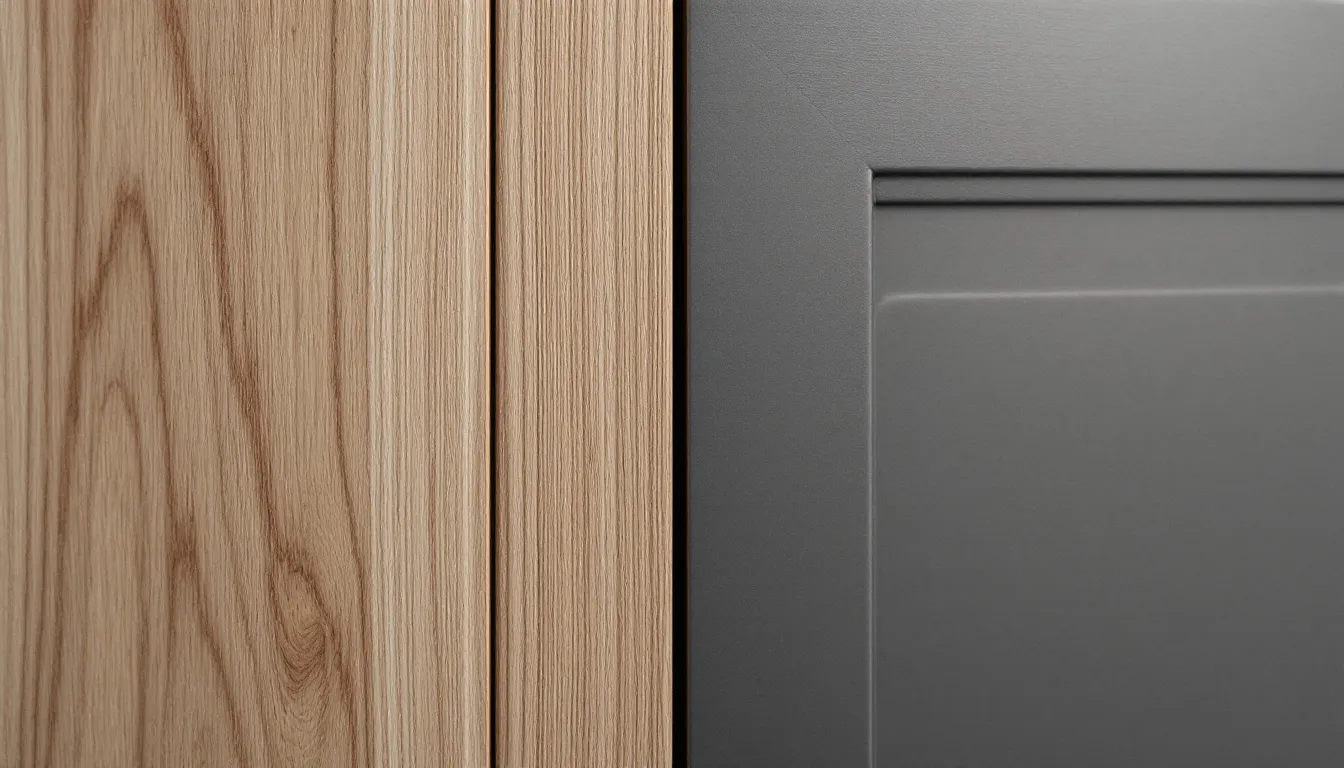
- Pale patinated or driftwood wood for the fronts
- Unbleached linen for curtains, cushions and seating
- Limestone or travertine on the worktop
- Warm raking light, interior and terrace in continuity
Light as a material in its own right
In a Mediterranean kitchen, natural light is treated as a material. The openings are wide, the curtains light, the walls often limewashed or painted in a very pale matt tone to bounce back the warmth of the day.
Artificial lighting follows the same logic: warm temperatures around 2700 K, multiple sources rather than a single central ceiling light, and lit cornices beneath the wall units so you never cook in your own shadow. In the evening, you are after the mood of a trattoria, not that of an open-plan office.
Indoor-outdoor circulation
This is probably the trait that best defines a Mediterranean-inspired kitchen. The worktop extends the terrace, the island welcomes guests as readily as the market shopping, and the table stays central to the room rather than relegated to a corner.
For Belgian projects, this logic translates in practice into a kitchen open to the living room, a multifunction island with an integrated dining nook, and wide glazing onto the garden or terrace. The floor, ideally large-format terracotta or pale stone, can extend outdoors without any visual break.
The right colours for Belgium
The classic Mediterranean palette revolves around ochres, burnt earths and olive greens. In Belgium, where the light is colder than in Naples, it is better to keep the palest warm tones and lighten them by half a shade. Ochres become sand, burnt earths shift to soft brick, olive greens soften into sage.
For the fronts, a slightly creamy off-white remains a safe choice. It catches the morning light and holds its warmth at the end of the day, without turning grey as a pure white would under the Belgian sky.
The takeaway
The essence of a Mediterranean kitchen comes down to restraint: four or five warm materials, a palette lightened by half a shade for Belgian light, and an assumed continuity between worktop, table and the outdoors. In the Italian register, the Living collection illustrates this vocabulary of openness well, with its pale-wood fronts and islands that extend the table, worth seeing in the showroom to judge the materials in real light. But the language matters more than the brand: lay the materials side by side first, watch how they react to the light of your room, and the rest will follow.